




Dr. Ducat's Blog
Take A Stand Against Knee Pain
May 15th, 2013
Avoid one of the most common orthopedic complaints by following these tips by Bloomingdale’s Sports Medicine Specialist.
1. Wear supportive shoes. Flip flops, “fashion” athletic shoes and dress shoes do not properly support your foot when you walk, which increases the pressure on your knee. Try to wear supportive athletic shoes when you will be on your feet for an extended period of time.
2. Keep your hips and ankles flexible. The knee joint suffers when the hip and ankle cannot move well because of tight muscles. Make sure you keep yourself balanced by stretching your hips (hamstring, piriformis, hip flexor) and your ankles (gastrocnemius) on a regular basis.
3. Use it or lose it. The cartilage that lines the knee joint needs movement to stay healthy. People who exercise at least three times a week have a lower risk of knee pain. Start with low impact activities such as riding a bike, walking or swimming and increase in intensity as you feel ready. Just think of it as a “mini oil change” for your knees every time you work out.
Want to learn more? Watch a video on how to keep your knees healthy through proper stretching at www.ducatchiropractic.com.
Dr. Erin Ducat is a Board-Certified Chiropractic Sports Physician who specializes in the non-surgical treatment of knee pain through chiropractic, rehabilitation exercises, manual therapies and acupuncture with Ducat Chiropractic & Sports Medicine in Bloomingdale, IL. For more information about her practice, go to www.ducatchiropractic.com
Lifestyle changes that can protect your back
March 25th, 2013
Why do certain patients seem to recover quickly from low back pain and others suffer for a longer period of time with repeated flare-ups? Recent research is indicating that your general lifestyle habits have a lot to do with injuring your low back and how long it takes for you to recover from the pain. Here a few lifestyle changes that can make a big difference for your spinal health.
Keep your blood sugar under control. Patients with higher blood sugar levels have a higher risk of sustaining back injuries and take longer to recover because the circulation in the discs and ligaments of the spine is compromised due to sugar “clogging” the capillaries in the area. Try eating less refined grains, sugars and balance naturally sweet foods like fruit with a piece of cheese or a handful of nuts. This will help your body avoid blood sugar spikes.
Avoid smoking and tobacco. Smokers have a higher risk of disc injuries and often take longer to recover from back pain and back surgeries than non-smokers. Nicotine, the drug in tobacco, makes the blood vessels smaller throughout your body, including your back, and prevents the good nutrients in the blood from getting to the injured area.
Make exercising and stretching a daily habit. Exercising can’t prevent all injuries, but you’ll reduce your risk of arthritis and chronic back pain by staying active. Make sure you have a good workout program that balances your body’s muscles and doesn’t overwork one area at the expense of another.
Dr. Erin Ducat is a Board-Certified Chiropractic Sports Physician in Bloomingdale, IL that specializes in the treatment and prevention of acute and chronic back pain. For more information about her practice, go to www.ducatchiropractic.com
Don’t Let Low Back Pain Creep Up On You!
February 20th, 2013
Three tips to prevent back injuries from Bloomingdale’s Sports Medicine Specialist.
1. Keep your hips flexible.
Tight hip muscles put additional stress on your spine every time you sit, bend over or take a step. Hamstring, piriformis and groin stretches are a must for anyone who wants a healthy back.
2. Pay attention to ALL of your “core muscles.”
Your “core” is more than just your abs. Make sure you mix in exercises that target your glutes, pelvic floor and abdominal muscles to keep your spine strong.
3. Don’t punish your back by sitting all day.
Sitting for extended periods of time promotes bad posture and increases pressure on the discs in your low back. Help your back out by taking “mini-breaks” to stand, walk or stretch while you’re at work.
Want to learn more? Watch a video on how to keep your back healthy through proper stretching at www.ducatchiropractic.com.
It’s Time to Make Your Health A Priority
January 15th, 2013Attention Busy Moms! Women often put the needs of their family above their own. As a result, moms are “burning out” and starting to get chronic conditions such as fibromyalgia, diabetes and arthritis at early ages than their parents. Here are a few tips from a working mom who specializes in helping women eliminate aches and pains so that they can return to their active family lifestyle.
1. You can’t run at 110% all of the time.
Your body was designed to handle stress, really well, but only for short periods of time. Picture the RPM gauge on your car. Normally, your car runs on lower RPM readings, but might spike up into that red zone when accelerating quickly. Its okay to get into that red zone intermittently, but your car engine would burn out if you constantly drove in that red zone. The same goes for your mind and body. Plan your life to keep yourself mostly in the black zone so that you have energy in the “reserves” when things really get crazy!
2. Plan ahead for healthier eating.
It’s easy to get into a “fast food rut” when you don’t have fast and easy healthy snacks and meals planned out for your family. Get into a habit of planning out your menu for the week, making sure you have all of your ingredients and also stocking healthy snacks such as nuts, fruit, cheese and vegetables. Numerous studies show that if you have healthy snack choices available, your calorie consumption will decrease substantially. Maybe your calories will go down enough to lose that baby weight!
3. Make an exercise appointment with yourself.
If you can get your kids to school on time, you can keep and exercise appointment with yourself. Taking time for fitness is not an optional event for moms – it’s mandatory. Exercise does more than burn calories; it reduces your risk of cancer, diabetes, heart disease, joint pain and even releases “feel good” chemicals that can help reduce your risk of depression. Make sure you spend at least 30 minutes exercising for at least 3 days a week.
Do you want a fast fix or a quality fix?
November 15th, 2012
There are usually two ways to can go about solving a problem. There is the quick solution that will get you through if you’re in a bind and there is the other fix that will take a little time, but will be a permanent resolution. The same principle applies to the human body.
Let’s say you sprained your ankle a few years ago. It wasn’t “bad.” No bruising. You could walk on it within a few hours. After icing it and wrapping yourself with an ACE bandage, you felt okay within a week or so. Sure, maybe your ankle didn’t bend quite as far anymore, but you could get around and perhaps return to your sport without major problems. As time went on, you would “tweak” that same ankle. You’d go through the same process of icing, wrapping, rest and then returned to your lifestyle. Of course, each time this cycle occurred, you lost a little more of your flexibility and a little more of your stability in that ankle.
Now you are starting to have pain in the bottom of your foot and along the Achilles tendon. You go to the sports chiropractor. We take a look at the situation at hand. You now have no flexibility at your ankle. There’s so much scar tissue built up around the injured ligaments that it is going to take weeks of Graston Technique or deep tissue massage/mobilization to break it up. Your muscles that control the foot and ankle are so atrophied from the repeat sprains, that it’s difficult for you to even stand on one foot for more than 5 seconds. We begin to teach you how to use those stabilizing muscles in the foot and about 8 weeks later you’re able to walk without the pain and finally can balance enough on one foot to put your pants on without sitting down to do it!
What happened here? I thought ankle sprains were no big deal, right? After your body sustains a sprain injury, there are small tears that occur in the ligaments and muscles that support the ankle and foot. Immediately after you hurt yourself, the body starts to put down a “quick fix” of fibrosis, or scar tissue, along the injured spots to help you get back to walking. The problem is that this scar tissue is not as strong as the original material and also doesn’t have the flexibility to allow for normal motion. If you don’t gently break down that scar tissue right away and prompt your body to put down good materials through deep stretching, balance exercises and mobilization of the area, the scar tissue keeps piling on and it makes it easy to hurt the area again.
So the next time you sprain or “pull” something, think about the quick fix and the quality fix and decide which one you want. You might start taking those small injuries a little more seriously!
Dr Erin Ducat is a Board-Certified Chiropractic Sports Physician in Bloomingdale IL that specializes in the diagnosis and rehabilitation of chronic ankle sprain injuries. For more information, go to www.ducatchiropractic.com
Keep Your Hamstrings Strong for a Healthy ACL
October 23rd, 2012
Nothing can end a sports career like a torn anterior cruciate ligament (ACL) injury in the knee. About 80% of the time, these injuries occur when the athlete plants their foot and pivots away with their knee bent. The hamstring muscles that support the knee don’t have enough endurance to control this quick movement and pressure is diverted to the ACL, which is only about 1/3″ wide and about 1″ long. The other 20% of ACL injuries are due to contact injuries with a direct blow to the side of the knee. Although you can’t prevent injury from a direct blow, increasing the strength of your hamstring muscles can reduce your overall risk of ACL injuries.
It’s impossible to strengthen a tight muscle. Start your workout by rolling out your hamstrings and hip abductors using a foam roller. Spend about 60-120 seconds on each muscle group, spending more time on areas that are tight or tender.
Stretch your hamstrings by using the modified downward dog stretch by starting in plank position with your hands on a weight bench. Next, walk your feet a little closer to the bench and lift your hips up to make a “v-shape.” Push your hips up, push your heels down into the ground and walk your feet closer to the bench until you feel a good stretch across the back of your thigh and into your calves.
Increase your hamstring endurance using exercise ball hamstring curls. Lay with your back on the ground with your legs straight and your heels on an exercise ball. Lift your hips off of the ground and then pull your heels (and the ball) towards your hips by bending your knees. As you get stronger, you can also do this by only using one leg at a time.
If you do sustain a direct blow or pivot injury to your knee, always have an athletic trainer or sports medicine professional evaluate it. Some injuries can heal with careful strengthening, but full ACL tears can require surgical repair.
Dr. Erin Ducat is a Board-Certified Chiropractic Sports Physician and Certified Strength and Conditioning Specialist that specializes in the prevention and non-surgical treatment of sports injuries in Bloomingdale, IL. For more information, go to www.ducatchiropractic.com
Stretching: Friend or Foe?
September 15th, 2012Stretching has been a part of warm-ups for decades. Recently, many coaches and doctors have been giving conflicted advice about stretches leaving athletes and weekend warriors confused whether their stretching routine (or lack thereof) is doing more harm than good. Here’s a quick summary about the pros and cons about stretching and flexibility training.
Not Everyone Needs To Stretch
Some body types are naturally flexible. They never seem to get tight or have trouble with deep yoga poses like the rest of us. These people can get away without stretching and can actually injure themselves if they try to “feel” a stretch by going too deeply. Focusing their workouts on stability and foam rolling will give them more results.
Some People Will Never Touch Their Toes
Just as some body types are very limber, others have tighter joints. When stretching, understand your limits and never push into pain to achieve the range of motion someone else is getting. The goal is to help you maintain the amount of flexibility that is normal for your body, not some abstract goal of perfection.
Flexibility Drills Can Maximize Results
Instead of always relying on static stretching (holding a stretch for 15-30 seconds), try implementing movement based flexibility drills such as walking lunges, leg swings or lateral lunges to gain mobility in the hips. For upper body flexibility, try wall slides. With your back to a wall, elbows bent at 90 degrees and hands up (fingers pointed towards the ceiling), pull your shoulder blades down and back. Make sure your hands and wrists are flat against the wall. As you slide up towards the ceiling with your hands, think about pressing gently into the wall with the forearms. Only go to the point of stretching along the front of your shoulder — don’t force it.
Those who do not maintain the natural amount of flexibility that they have in their joints will have decreased athletic performance and an increased risk of injuries. If you find it difficult to maintain your range of motion, try stretching and doing flexibility drills on a daily basis. Most people spend long periods of time sitting at school or work, so spending 15 minutes once a week on stretching isn’t going to go far enough!
Dr. Erin Ducat is a Board-Certified Chiropractic Sports Physician in Bloomingdale, IL and specializes in hands-on soft tissue muscle techniques and unique mobilization drills to improve flexibility in both injured patients and those looking to improve their athletic performance. For more information, go to www.ducatchiropractic.com.
Just say no…to slouchy shoulders!
August 14th, 2012
Maybe your mom nags you to sit up straight. Are you shocked when you see your posture in a mirror or side profile picture? Poor posture is more than just a “bad look.” It can cause pain and decrease athletic performance.
Athletes that need to have good overhead flexibility or shoulder strength will notice that their speed and range of motion will slowly decrease as their shoulders roll forward. Because the muscles are having to work harder to reach overhead, they will notice more shoulder/neck soreness after practice or even develop tendonitis from overuse. Asthmatics and endurance athletes also experience shortness of breath with “slouched” shoulders because they are unable to adequately fill their lungs.
The typical “slouched” position is a symptom of a muscle imbalance between the chest and middle back. Because we all spend a good portion of the day in a seated position on our computers, playing video games, texting or sitting in school, the chest muscles shorten and the muscles across the shoulder blades become lengthened and weak. As gravity and time takes over, it gets harder to achieve good posture.
Adding some simple drills to your conditioning routine can help counteract the time that you spend “slouching.” Try a doorway pectoral stretch to increase shoulder flexibility. You can also lay with your back on a weight bench or rigid foam roller with some small free weights (3-5 pounds) and allow gravity to stretch open the chest with 120-180 second holds.
Strengthening the middle back is just as imporant as stretching the chest. Traditional exercises such as planks, lat pull downs and bent over rows target postural muscles. For more of a challenge, try TYW’s by laying face down on an exercise ball and make a T by raising your arms to the sides. Relax your arms and then raise them into a Y with thumbs up. Relax again and then make a W as your raise your arms with your elbows bent at 90 degrees. Once you get used to the pattern, add 3-5 pound free weights into your hands. (Watch the video below for detailed instructions)
If you start noticing neck, shoulder or elbow pain with your everyday activities or sports that do not respond to stretching or icing within 2 weeks, it’s important to consult a sports chiropractor who can determine if your posture has caused a tendonitis or overuse injury that needs therapy to heal. Chiropractic adjustments, massage therapy and targeted exercises can be very effective for these injuries and postural changes. You often notice a change after the first treatment.
Dr. Erin Ducat is a Board-Certified Chiropractic Sports Physician and Certified Strength and Conditioning Specialist practicing in Bloomingdale. She specializes in the diagnosis and non-surgical treatment of various sports injuries including rotator cuff/shoulder problems, tennis elbow and wrist/hand tendonitis. For more information about her practice, go to www.ducatchiropractic.com/the-sports-clinic
The Hip Bone Connects To The Knee Bone
July 24th, 2012
Split Squats with Free Weights
The key to keeping female athletes playing their sport and continuing to the college level are strong hip abductor muscles. The hip abductor, otherwise known as the glute medius muscle, is located along the side of the hip and works to keep their pelvis level while running, kicking or throwing as well as supporting the knee during sharp turns, pivots or long distance running. Female athletes have a greater risk of knee injuries, particularly of the ACL, meniscus or MCL, because they have a high rate of weakness of their hip abductors coupled with a wider hip width that angles inwards at the knee when compared to thier male counterparts.
Starting at an early age, it’s important to teach girls proper warm-ups and age-appropriate stengthening exercises to prevent weakness in this key muscle group. For younger athletes, you can start side step or monster step drills with elastic resistance band around their ankles to target the hip abductors in a safe, fun manner. As their coordination improves, you can also add standard lateral shuttles or lateral grapvine shuttles to their conditioning program. At the high school level, challenge them by doing standard or lateral step-ups on a step-up box, single leg squats, lunges and split squats with appropriate free weights.
If your athlete starts complaining of significant knee pain or swelling after a particular incident such as a sharp turn or fall, they should be immediately evaluated by a sports chiropractor because there is a high risk of ligament or meniscus damage. If the knee pain starts more gradually, have the athlete start applying ice 2-3 times a day, reduce their play time and make sure they are completing all of their stretches and warm-ups. If the pain gets worse or does not go away within 2 weeks, have them evaluated by a sports chiropractor. Most knee injuries can be treated with therapy, taping and strengthening exercises when caught early. The longer your athlete plays on an injured joint, the greater chance that they might need surgical intervention to repair the damage.
Dr. Erin E. Ducat is a Board-Certified Chiropractic Sports Physician and Certified Strength and Conditioning Specialist that specializes in the diagnosis and non-surgical treatment of pediatric and adult athletic injuries at Ducat Chiropractic & Sports Medicine in Bloomingdale, IL. For more information on the prevention of injuries or Dr. Ducat’s sports medicine & one-on-one rehabilitation services, go to her website at www.ducatchiropractic.com/the-sports-clinic.
Is low back pain a chronic disease?
June 25th, 2012
Chronic diseases have been in the news a lot lately with the debate about health care costs and reform. When you hear about chronic diseases, you most likely think about diabetes, high blood pressure, high cholesterol and obesity. But what about low back pain?
Although many medical sources will state that most cases of low back pain are self-limiting, all you have to do is ask a patient with low back pain or a physician who routinely treats this condition to find out that it does not usually permanently go away on its own. A normal pattern for low back pain is someone who has a flare-up of pain that gets better after taking medication for a few days, but then has their back “go out” a few weeks, months or years later, with the same injury. Sometimes the over the counter medications work, sometimes they don’t. This pattern continues to repeat with less time between flare-ups until the point where the patient has constant pain.
It is true that there can be isolated cases of low back pain that never return, but that tends to be the exception and not the rule. The current theory is that low back pain causes a reflex that makes the body compensate and protect the area by tightening certain muscles and allowing other muscles to atrophy. This sets up the scene for another injury and you can see where this pattern leads. It’s a terrible cycle.
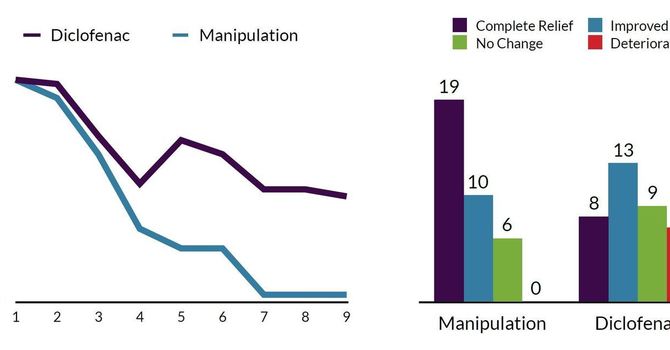
So with almost 25% of the population affected by low back pain within the last 3 months, what can we do to break the cycle? Although there is no cure, research shows that chiropractic manipulation (adjustments) can be effective and safe for the treatment of both new episodes and chronic back pain. Addition of soft tissue techniques (deep tissue massage), stretching and exercise therapy to manipulation can increase the success rate of treating back pain for the long run. Short term use of medication can be effective as well, but the risks of side effects from medication is greater than manipulation, massage or exercise therapy. Acupuncture can also be effective with minimal side effects. Epidural injections or surgery can be effective as well, but are used only in extreme cases due to their side effects and risks.
Even with the best chiropractic and rehabilitation care, low back pain patients have a high risk of flare-ups after completing their treatment plan. Some research has shown decreased pain and disability levels with maintenance chiropractic adjustments on a 4-6 week interval for prevention. Other research shows that re-entering a treatment plan as soon as the pain returns is the best way to “nip the low back pain in the bud.”
Dr. Erin Ducat a Board-Certified Chiropractic Sports Physician who specializes in the treatment of chronic or recurring low back pain in Bloomingdale, IL. For more information, go to www.ducatchiropractic.com
